Overview
A concrete-plant equipment manufacturer required a safer and more efficient way to manage dust generated during silo filling operations. The goal was to maintain environmental quality while improving worker safety and minimizing material loss.
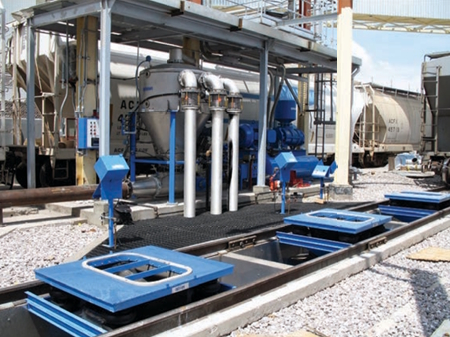
Traditional dust collection methods require elevated access and manual handling, creating safety and productivity challenges. The project required a ground-level, automated solution that could integrate with existing rail or truck unloading systems.
Challenges
The application presented several operational challenges:
- Reliance on elevated bin vents requiring unsafe maintenance access
- Dust emissions during silo filling affecting air quality
- Loss of valuable product material in collected dust
- Manual or labor-intensive dust removal processes
- Need for system compatibility with unloading operations
- Requirement for automated, unsupervised operation
- Pressure to meet environmental and safety standards
These combined issues increased operational risk, reduced efficiency, and limited productivity improvements.
Solutions
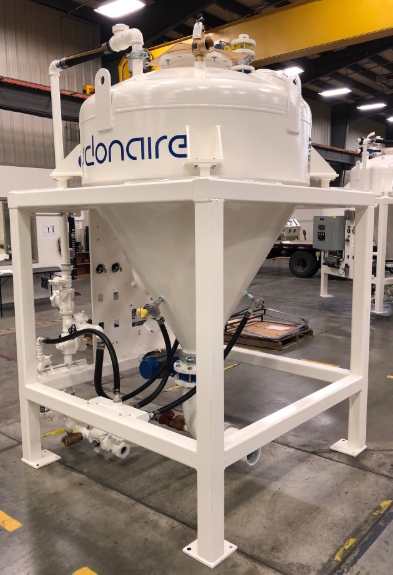
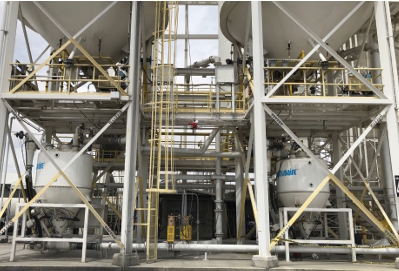
An automated collect-and-convey dust reclaim system was implemented to capture and return dust directly to the process.
Key elements of the solution included:
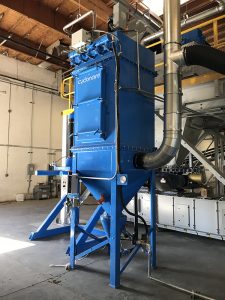
- Ground-level pulse jet dust collector for safe access and maintenance
- Dense phase pneumatic conveying system for dust return to silo
- Gravity-fed transport system operating only when needed
- Automatic filter cleaning using pulse jet reverse airflow
- PLC-based controls enabling fully automated operation
- High-level hopper sensor triggering reclaim cycle activation
- Factory-assembled system designed for integration with existing operations
The system was factory tested and configured for reliable performance prior to installation.
Results
Implementation of the system delivered measurable operational improvements:
- Improved air quality during silo filling operations
- Recovery and reuse of captured product material
- Enhanced worker safety with ground-level equipment access
- Reduced labor requirements through automated operation
- Lower energy usage due to demand-based air operation
- Elimination of additional equipment such as blowers and rotary valves
- Seamless integration with truck and rail unloading systems
Overall, the system improved environmental performance, operational efficiency, and safety while reducing material waste.
To view the full case study, please fill out the form below.