Overview
Radioactive waste solidification is a critical treatment process used to prepare waste streams for long-term storage and disposal. The process typically combines radioactive waste with cementitious binder materials to create a stable solid form suitable for handling and containment.
This application required continuous mixing of radioactive waste and cementitious materials while maintaining precise component ratios, homogeneous blending, and stable process conditions. Consistent material properties are essential to achieving reliable solidification performance.
Challenges
Radioactive waste solidification presents several operational challenges:
- Maintaining precise ratios of waste, water, and binder materials
- Producing a homogeneous mixture continuously
- Maintaining stable process temperatures
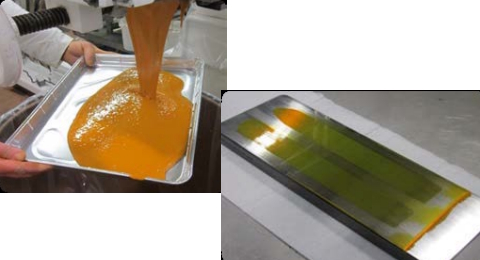
- Achieving consistent solidification characteristics
- Maximizing throughput while maintaining product quality
- Minimizing operator exposure and material handling
- Reducing dust generation during processing
These challenges directly affect disposal requirements, process reliability, and operational efficiency.
Solutions
A continuous processing system was implemented to provide accurate blending of radioactive waste and cementitious binder materials.
Key elements of the solution included:
- Continuous mixing technology for steady-state operation
- Accurate feed pump calibration for ratio control
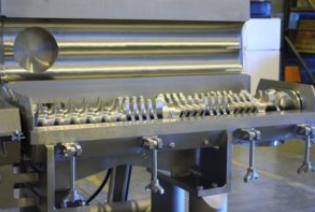
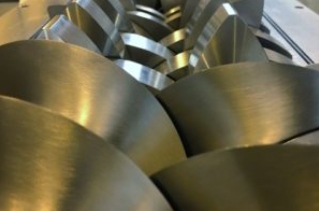
- Adjustable paddle configurations to optimize mixing performance
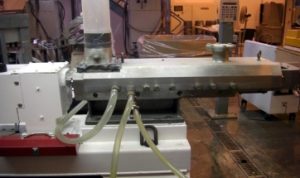
- Pilot plant testing to simulate full-scale production conditions
- Controlled addition of water and dry binder materials
- Enclosed mixing chamber to reduce dust generation
- Flexible operating parameters for process optimization
The pilot testing program enabled process conditions to be validated before full-scale implementation, ensuring consistent product performance and throughput.
Results
Implementation of the continuous processing system delivered measurable benefits:
- Consistent homogeneous mixing of waste and binder materials
- Reliable control of component ratios
- Approximately 33% increase in throughput
- Reduced cleanup and maintenance requirements
- Reduced dust generation compared to conventional mixing methods
- Continuous production with stable operating conditions
- Efficient preparation of material for solidification and disposal
Overall, the system supports reliable radioactive waste stabilization through controlled continuous mixing. processing conditions.
Related Solutions
- Continuous mixing and processing systems for controlled material conditioning
- Dust collection systems for control of particulate emissions during material handling
- Mass flow screw feeders for accurate delivery of powders and bulk solids
To view the full case study, please fill out the form below.