Overview
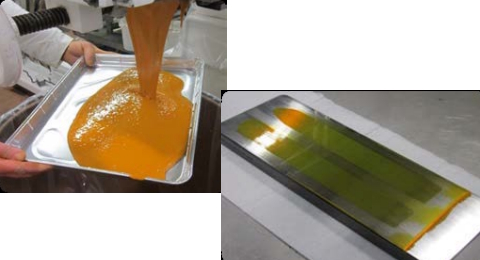
Radioactive waste management often requires removal of water from contaminated slurries before storage or disposal. Reducing moisture content decreases overall waste volume and produces a more stable material for downstream handling and containment.
This application required continuous processing of radioactive waste slurry containing approximately 89% contaminated water and 11% solids. The process objective was to reduce moisture content to approximately 0.1% using a combination of heat and vacuum technology.
Challenges
Radioactive waste drying applications present several operational challenges:
- Removing large quantities of moisture from contaminated slurries
- Achieving extremely low final moisture levels
- Maintaining efficient heat transfer throughout the process
- Controlling vapor generated during evaporation
- Minimizing residual material within processing equipment
- Supporting safe containment of process streams
- Reducing overall waste volume for storage and disposal
These challenges directly affect disposal costs, process efficiency, and long-term waste management requirements.
Solutions
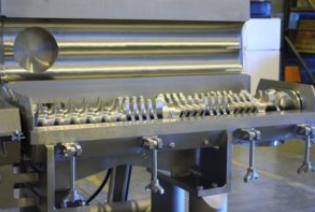
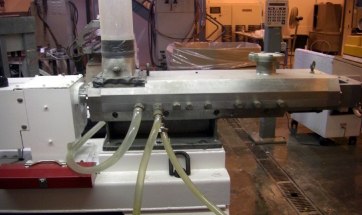
A self-cleaning continuous processor with integrated heating and vacuum capability was implemented to remove moisture from radioactive waste slurry.
Key elements of the solution included:
- Long retention time for maximum moisture removal
- Combined heat and vacuum processing
- Jacketed barrel design for efficient thermal transfer
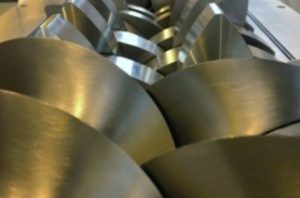
- Cored shafts providing additional heating surface area
- Continuous evaporation under vacuum conditions
- Self-wiping twin counter-rotating shafts
- Fully enclosed processing system for vapor containment
The combination of applied heat and vacuum enabled continuous evaporation of moisture while maintaining efficient thermal transfer throughout the process.
Results
Implementation of the continuous drying system delivered measurable benefits:
- Moisture reduction from approximately 89% to 0.1%
- Significant reduction in waste volume
- Efficient heat transfer through jacketed and cored components
- Continuous removal of moisture through evaporation
- Enclosed vapor handling and containment
- Potential recovery and condensation of removed volatiles
- Reduced residual material remaining in the processor after operation
Overall, the system supports preparation of radioactive waste materials for storage and disposal while maintaining controlled processing conditions.
Related Solutions
- Continuous mixing and processing systems for thermal and vacuum applications
- Industrial ductwork systems for vapor transport and system integration
- Mist elimination systems for aerosol and vapor stream treatment
To view the full case study, please fill out the form below.