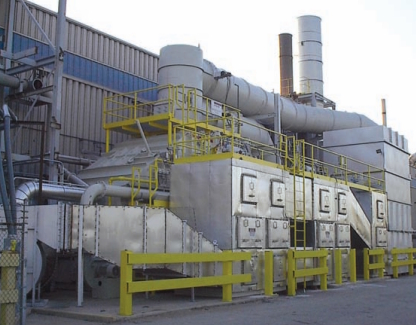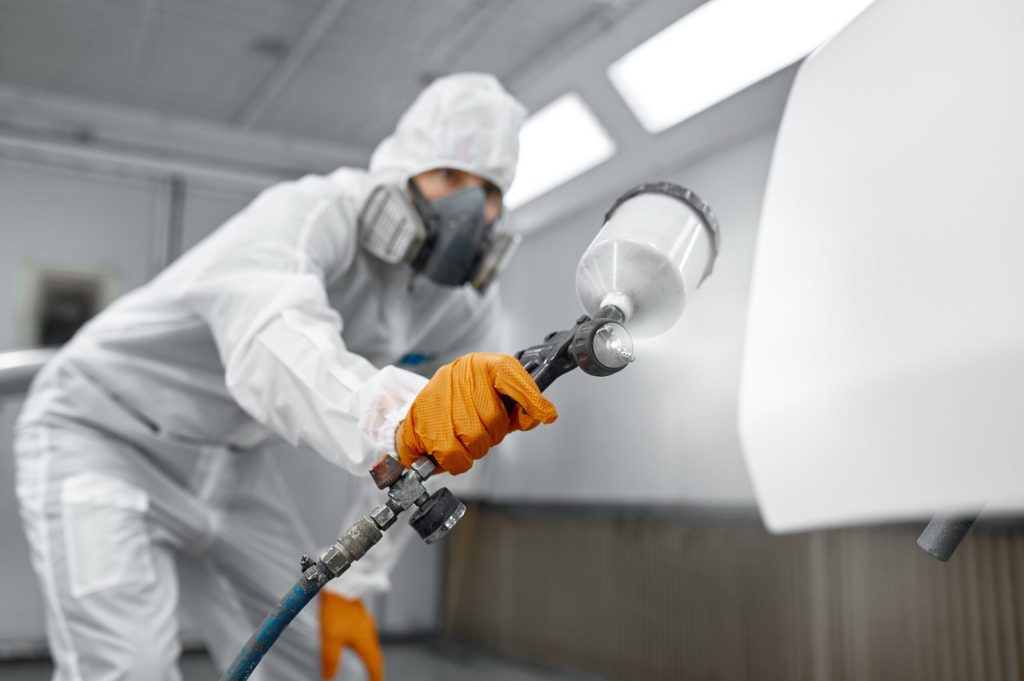
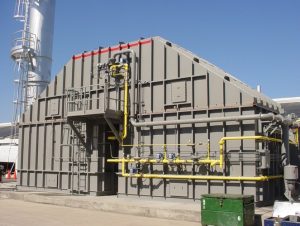
Overview
Industrial processes such as painting, coating, chemical manufacturing, and printing generate volatile organic compound (VOC) emissions that must be controlled to meet environmental regulations. Regenerative thermal oxidizers (RTOs) are widely used to destroy these contaminants while maximizing energy efficiency.
Traditional emission control methods can result in high fuel usage and operating costs. The application required a solution capable of achieving high destruction efficiency while minimizing energy consumption through heat recovery.
Challenges
VOC treatment systems present several operational challenges:
- High energy consumption required for thermal destruction of VOCs
- Variable VOC concentrations affecting system performance
- Need for high destruction removal efficiency (DRE)
- Managing large airflow volumes in industrial operations
- Maintaining system reliability with continuous operation
- Handling corrosive or particulate-laden air streams
- Controlling operating costs over long-term use
These combined challenges increase operational expenses and complicate emissions compliance.
Solutions
A regenerative thermal oxidizer system was implemented to destroy VOCs while recovering heat from the exhaust stream.
Key elements of the solution included:
- High-efficiency thermal oxidation achieving 99%+ destruction removal efficiency
- Ceramic heat recovery media to transfer and store thermal energy
- Regenerative chamber design enabling 95%+ thermal energy recovery
- Automated valve operation for efficient airflow switching between chambers
- PLC-based control system with integrated safety and monitoring functions
- Supplemental fuel injection to optimize combustion and reduce operating costs
- Configurable multi-chamber design for improved efficiency and performance
The system design was validated through proven applications and optimized airflow distribution to ensure consistent operation.
Results
Implementation of the RTO system delivered measurable improvements:
- Significant reduction in VOC emissions with high destruction efficiency
- Lower fuel consumption due to heat recovery exceeding 95%
- Reduced operating costs through energy-efficient design
- Reliable operation across varying VOC concentrations and airflow rates
- Improved environmental compliance and emission control performance
- Enhanced system flexibility with modular and multi-chamber configurations
- Reduced electrical consumption through low pressure drop design
Overall, the system provided an energy-efficient solution for VOC control while maintaining high performance and reducing long-term operating costs.
RELATED SOLUTIONS
- Wet scrubber systems for removal of soluble gases and acid vapors
- Cyclone separators for upstream particulate removal and pre-cleaning
- Dust collection and reclaim systems for material recovery and emission control
To view the full case study, please fill out the form below.