Overview
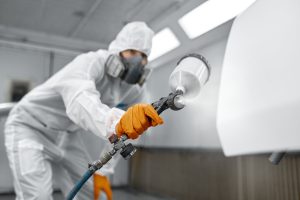
Our Principal provides air pollution control solutions for industrial applications. They specialize in capturing and destroying volatile organic compounds and hazardous air pollutants emitted during painting and finishing processes.
Manufacturers in segments like automotive and machinery often face high costs for environmental compliance. This project addressed the need to reduce fuel consumption and greenhouse gas emissions while maintaining high destruction efficiency for paint booth exhaust.
Challenges
The facility faced several technical and regulatory obstacles regarding their paint boot emissions:
- Managing large airflow volumes in the tens of thousands of standard cubic feet per minute
- Treating exhaust streams with very low concentrations of pollutants (50 to 200 PPM)
- Reducing high supplemental natural gas usage required for traditional thermal oxidation
- Minimizing secondary air pollution like carbon dioxide and nitrous oxides from abatement devices
- Complying with Clean Air Act regulations and EPA capture efficiency requirements
- Balancing the need for high destruction rates with upcoming carbon legislation concerns
- Managing the intermittent nature of painting operations which affects emission consistency
- Mitigating the high capital and operating costs of oversized oxidation equipment
These factors combined to create a high-cost, carbon-intensive environment for environmental compliance.
Solutions
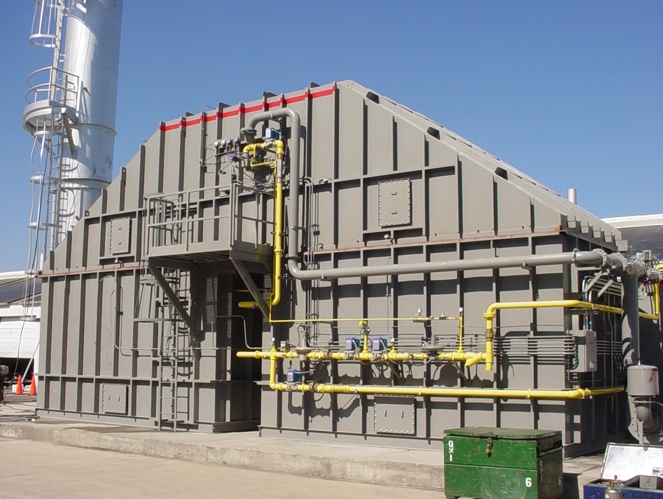
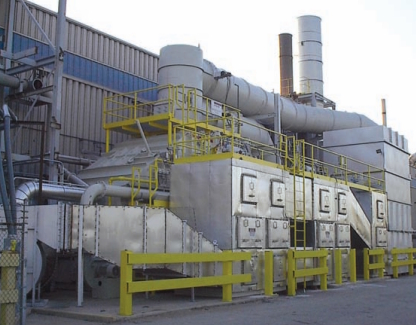
The implementation of a rotor concentrator system integrated with a regenerative thermal oxidizer provided the necessary abatement.
Key elements of the solution included:
- Integration of a concentrator wheel to reduce airflow by a factor of eight to 20
- Installation of a regenerative thermal oxidizer sized for a reduced 5,000 SCFM stream
- Utilization of adsorptive media to strip VOCs and HAPs from the high-volume airstream
- Deployment of a desorption section using a low-volume, heated airstream
- Optimization of the system to facilitate self-sustaining, fuel-free destruction
- Calculated modeling of the lower carbon footprint to secure regulatory variances
All systems are engineered and tested to meet or exceed international environmental safety standards.
Results
The integrated system delivered significant improvements to the facility’s operational profile:
- Reduced natural gas consumption and associated operating costs
- Decreased greenhouse gas emissions from the combustion device
- Lowered secondary air pollution such as CO2 and NOx emissions
- Enabled the use of much smaller, more efficient oxidation equipment
- Captured purified exhaust heat to preheat incoming untreated airflow
- Achieved up to 97.5 percent destruction rate efficiency for VOCs
- Maintained environmental compliance with a smaller carbon footprint
- Lowered the overall cost per ton of additional control efficiency
The project successfully balanced VOC removal with carbon reduction to create a sustainable compliance strategy.
To view the full case study, please fill out the form below.