Overview
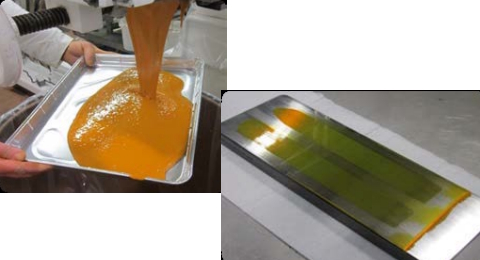
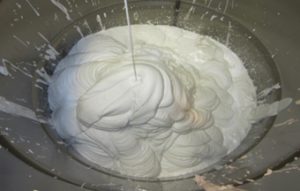
A manufacturer of pre-mixed joint compound required a more consistent and efficient method of producing a smooth, homogeneous material from dry fillers, binders, and water. The product is widely used in construction applications and demands uniform texture and performance.
Traditional batch mixing led to inconsistencies in product quality and increased waste between production runs. The operation required a continuous processing approach to stabilize output while allowing flexibility for specialty formulations
Challenges
The process presented several operational challenges:
- Variability in product quality due to batch mixing methods
- Difficulty achieving consistent dispersion of filler and binder materials
- Inefficient changeovers between different product formulations
- Excess material waste during batch transitions
- High energy usage associated with longer processing cycles
- Need for consistent feed control of multiple ingredients
- Requirement for flexible production of specialty blends
These combined issues limited production efficiency and made it difficult to maintain consistent product quality.
Solutions
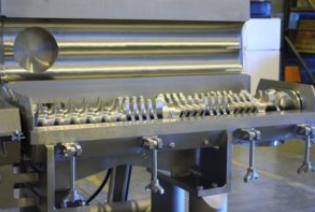
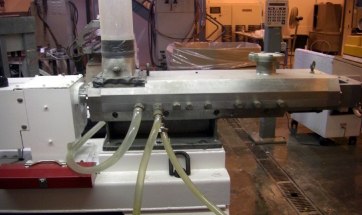
A continuous processor with customizable paddle configuration was implemented to achieve consistent mixing and dispersion.
Key elements of the solution included:
- Continuous mixing system replacing traditional batch processing
- Adjustable paddle arrangement to control shear from low to high levels
- Precise metering and feeding of dry materials, binder, and water
- Variable shaft speed operation to optimize mixing performance
- Design enabling short residence time and reduced energy consumption
- Clean-in-place capability for rapid cleaning and changeover
- Integrated process allowing direct feed to downstream packaging
The system performance was validated through controlled operation and process tuning to meet product specifications.
Results
The implemented solution delivered measurable operational improvements:
- Improved product consistency with uniform dispersion and texture
- Reduced batch-to-batch variability across production runs
- Lower energy consumption due to shorter processing time
- Reduced material waste through continuous operation and precise control
- Faster changeovers between product formulations
- Streamlined production with reduced need for intermediate storage
- Increased production efficiency with continuous flow processing
Overall, the system provided more consistent product quality while reducing waste, energy usage, and operational complexity.
To view the full case study, please fill out the form below.