Overview
A fertilizer research and development facility required a reliable method to handle prilled urea for continuous processing. The organization develops fertilizer solutions for agricultural use and relies on consistent material feed for process stability.
The existing handling of hygroscopic urea led to flow interruptions and buildup, impacting delivery to a steam-heated melter. A controlled, accurate feed system was required to maintain consistent downstream processing conditions.
Challenges
The process faced several material handling challenges:
- Hygroscopic urea becoming sticky under moist conditions
- Material buildup within storage and handling equipment
- Inconsistent flow to the steam-heated melter
- Requirement for precise feed rates within narrow range
- Process sensitivity to fluctuations in feed consistency
- Difficulty maintaining steady melter level and temperature
- Operational downtime caused by flow interruptions
These combined factors disrupted process stability and reduced overall production efficiency.
Solutions
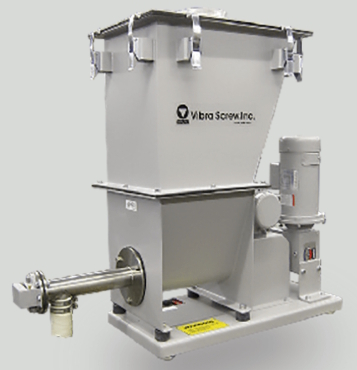
A live bottom bin with integrated heavy-duty screw feeder was implemented to provide controlled, continuous urea flow.
Key elements of the solution included:
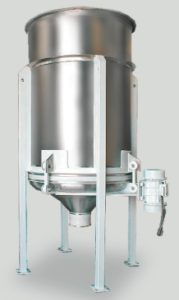
- Live bottom bin combining static storage with vibratory bin activator
- Controlled vibration to maintain steady and uniform material discharge
- Heavy-duty screw feeder delivering precise feed rates from 0.5 to 2 TPH
- Integrated system mounted on scale for monitoring and control
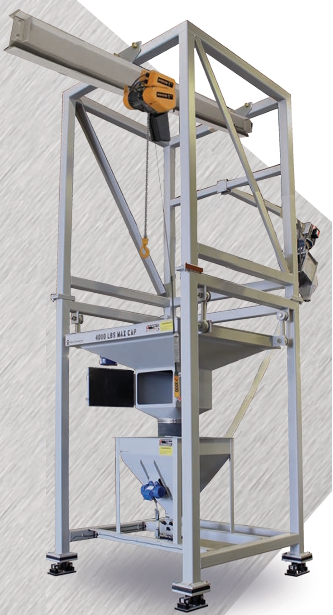
- Movable frame design allowing forklift relocation
- Washable system design enabling efficient cleaning and maintenance
The system was validated through consistent performance under operating conditions with minimal deviation from set feed rates.
Results
The implemented solution delivered measurable operational improvements:
- Uniform and continuous feeding of prilled urea
- Feed rate accuracy maintained within ±1–2% deviation
- Reduced buildup and material handling issues
- Stable operation of steam-heated melter system
- Improved consistency in downstream granulation process
- Increased overall fertilizer production output
- Reduced downtime associated with flow interruptions
Overall, the system improved process reliability and enabled consistent production performance with minimal interruptions.
To view the full case study, please fill out the form below.