Overview
A foundry operation manufacturing cast railroad components required reliable handling of high-moisture molding sand used in continuous production. The process depended on steady material flow to maintain consistent mold quality and throughput.
The sand exhibited cohesive, sticky behavior that disrupted flow from storage bins into mixers and molding equipment. This created production instability and excessive manual intervention to maintain operations.
Challenges
The operation faced several material handling challenges:
- Stickiness of sand causing adhesion to vertical surfaces
- Formation of large ratholes extending through entire bins
- Interrupted material flow into mixers and feeders
- Frequent need for manual hammering to restart discharge
- Reduced usable sand volume due to flow inconsistencies
- Half-filled molds caused by feeder shutdown timing mismatch
- Accumulation requiring bin draining and scraping maintenance
These combined issues reduced efficiency, increased labor requirements, and compromised mold quality.
Solutions
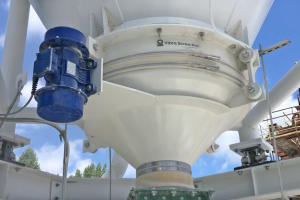
A system of vibratory bin activators was installed to ensure consistent discharge of cohesive molding sand.
Key elements of the solution included:
- Installation of multiple bin activators across return and prepared sand bins
- Flexible mounting at bin outlets to transmit controlled vibration
- Gyrator-driven vibration system energizing material without stressing bins
- Internal baffle design to promote mass flow and prevent ratholing
- Conversion of horizontal vibration forces into vertical flow-inducing motion
- Dished head geometry to prevent material wedging and reduce energy use
The solution was validated through a successful plant trial prior to full installation.
Results
Implementation of the system delivered the following improvements:
- Consistent sand flow without hangups or interruptions
- Elimination of ratholing within storage bins
- Reliable and complete filling of molds
- Reduction in manual intervention and hammering
- Full utilization of bin storage capacity
- Improved feeding consistency to molding machines
- Elimination of routine bin cleaning and scraping
Overall, the system restored stable production with improved efficiency, reduced maintenance, and better process reliability
To view the full case study, please fill out the form below.